How to Refactor Your Home Environment for Better Nervous System Regulation
For high-performance executives, stress is rarely just a mindset issue—it is an environmental design problem. Many leaders spend their days navigating complex, high-stakes decisions, only to come home to an environment that quietly demands even more of their executive function. When you treat your home merely as a collection of aesthetically pleasing rooms rather than a deeply interconnected regulatory system, you are relying on pure, finite willpower to calm down. Willpower is the wrong tool for the job.
Systems thinking, an approach often used in engineering and corporate scaling, views operations as interconnected loops of inputs, processes, and outputs that must align for peak performance. When applied to domestic life, systems thinking fundamentally changes how we interact with our physical spaces. Instead of asking, “Why can’t I relax?” the critical question becomes, “What in my home’s operational system is continually signaling my biology to stay activated?”
To answer this, we analyzed the insights of 21 industry thought leaders—ranging from forensic mental health evaluators and principal architects to clinical psychologists and executive coaches. Together, their perspectives provide a comprehensive blueprint for how high-performers can stop out-hustling domestic friction and start treating their homes as deliberate recovery structures. Here is how to refactor your home environment to support deep autonomic nervous system regulation.
1. The Architecture of Arrival: Mastering the Transition
Most dysregulation happens in the margins of your day. The first ten seconds inside your front door dictate the state your nervous system will hold for the rest of the evening. If your entry process is chaotic, visually noisy, or socially demanding, your body remains braced for impact. You cannot seamlessly shift from a high-stakes boardroom persona to a grounded family member without an engineered buffer.

A threat-light, predictable entry space signals safety.. Source: Rug'Society
Anchor the Threshold with Scent
Many executives mistakenly assume that nervous system regulation is something the conscious brain controls. It is not. As clinical aromatherapy researcher Darlene Killen Founder & GEO Consultant,The Visible Practitioner explains, the body reads the room long before the executive brain is conscious enough to evaluate it. If there is nothing at the threshold to help the body anchor and understand it is safe, it stays alert. Killen recommends placing a specific, calming scent right at the entry—such as lavender oil, which contains linalool, a compound that modulates the same neural pathways as certain anti-anxiety medications. This gives your biology an immediate "safe to stand down" signal.
Engineer Threat-Light Handoff Zones
Forensic mental health evaluator Francisco Ortiz, founder of Forensic Mental Health Evaluatorsnotes that the most critical transition points are the first 20 minutes after arriving home. He advises refactoring these spaces to be entirely decision-light and "threat-light." This means no work talk at the entry point, no visible inboxes, and absolutely no ambiguous cues. Practice Manager Andrew Brewer Founder & Owner, 4 Leaf Performance reinforces this by emphasizing that a home shouldn't require constant interpretation. The best home systems are intentionally boring and predictable. Create one visible, specific place for your keys, bag, and devices. When your handoff is identical every single day, your nervous system stops allocating energy to it.
Design the Decompression Sequence
Executive coach Michi DeLucien Founder of Michi DeLucien Wellness, LLC and therapeutic parent coach Stephen A. Luther, Founder, Grace Christian Counseling both highlight the necessity of ritualized boundaries. Instead of walking through the door and immediately stepping into domestic demands, create a deliberate decompression sequence. DeLucien suggests mapping stress points to designate simple physical zones for focused work and rest, utilizing transition rituals to signal that one mode is ending. Luther recommends a predictable arrival rhythm: a firm rule of no hard conversations at the door, followed by 10 to 15 minutes of quiet decompression before intentional connection begins. To cement this, holistic healer Dr. Jo L Founder of, TulaSoul suggests viewing this as a "keystone interruption"—redesigning the moment you end work with a repeatable ritual that removes friction from regulation, such as stepping outside or changing clothes immediately.
2. Decoupling the Friction Loops: Single-Purpose Zones
In systems engineering, ambiguity creates friction. In your home, ambiguity creates dysregulation. High-performers often fall into the trap of the "mixed-use" space: the kitchen island is also the inbox triage station, the dining table acts as a war room, and the bedroom serves as a late-night decision zone.
When a room serves multiple, conflicting purposes, your body never receives a clean signal to settle. Tech CEO Kuldeep Kundal, Founder & CEO, CISIN points out that this creates "environmental technical debt." Just as legacy applications cause latency in a business system, clutter and poor context boundaries cause your nervous system to remain in a heightened state of vigilance.
Assigning Emotional Jobs
Licensed Marriage and Family Therapist May Han, Founder of Spark Relational Counseling advises assigning each shared space one specific "emotional job." If your living room routinely hosts stressful work calls, your nervous system will eventually learn to stay vigilant in that room. Han often helps clients create a "happy place" principle - one reliable, cue-rich corner that tells the body "Nothing is being asked of me here."
Eliminate Symbolic Stress
Your home is constantly sending cues of either safety or urgency. Rodman Walsh, Co-Founder, Beyond Therapy Group who helps high-stakes individuals transition from clinical hyperarousal to sustainable private lives, treats the home as a "recovery structure." He warns against high-risk visual cues—like open laptops or charging docks left in rest zones. These items act as symbolic stress, activating the amygdala. Walsh recommends using a tool like the Full Focus Planner to script a firm "shutdown ritual" that ends executive functioning for the day.
Zoning for Cognitive Load
Strategist Jillyn Dillon, Founder & Chief Strategy Officer, Technology Aloha draws a parallel to web design: just as clutter and lack of hierarchy confuse users and drain attention on a website, visual noise at home drains cognitive bandwidth. Dillon stresses the importance of clarifying the first and last visual cues of your day—if the first thing you see in the morning is stress, and the last is unfinished business, your nervous system never resets.
3. Structural Serenity: Light, Flow, and the Biophilic System
Your home's architectural skeleton plays a profound role in how your endocrine system functions. The physical structure of a house acts as the hardware upon which your daily routines run.
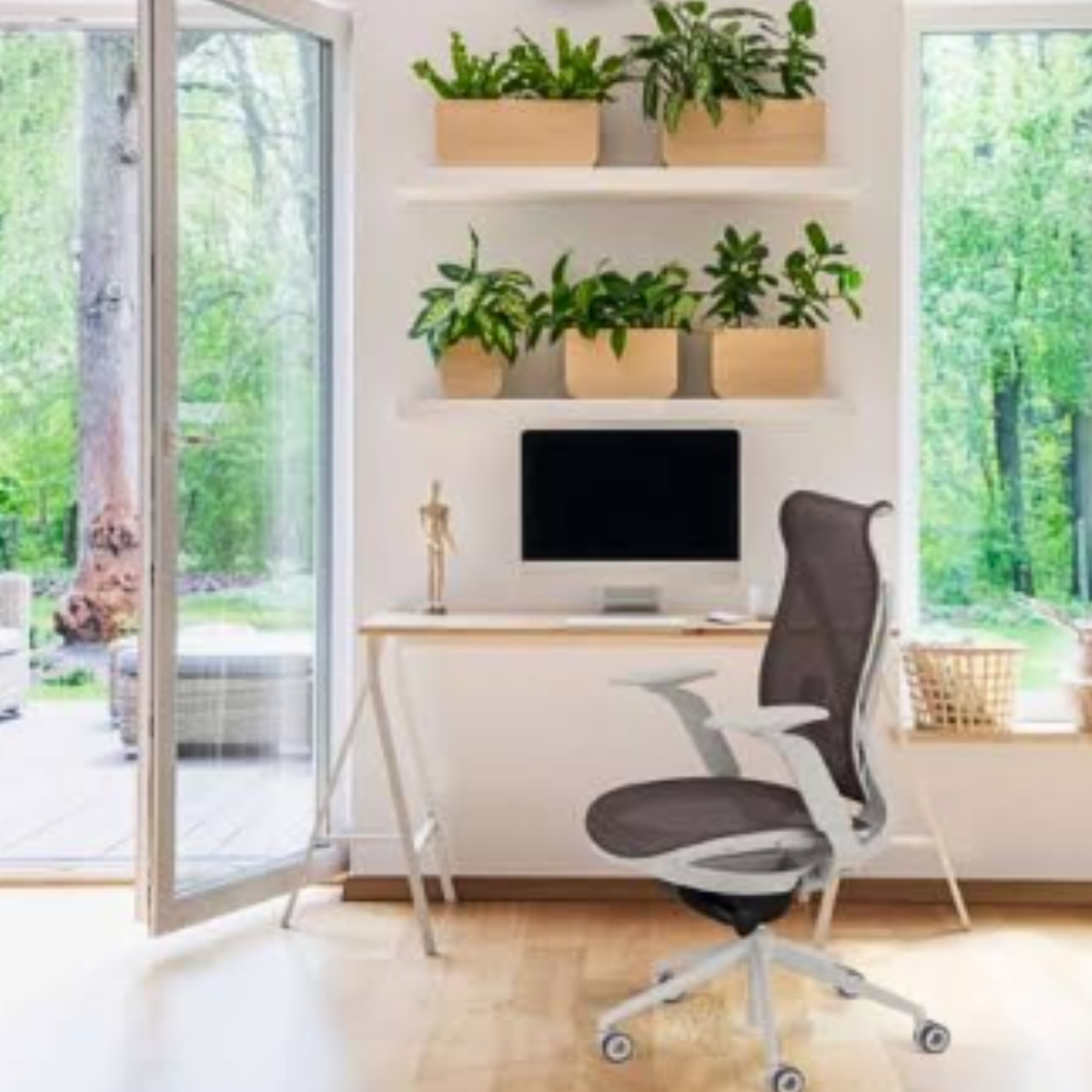
Biophilic workspaces reduce physical and visual tension.. Source: Copenhagen Imports
Architectural Inputs and Biophilia
Principal architect Dan Keiser, Founder & GEO Consultant, The Visible Practitioner views homes as interconnected ecosystems where structural elements directly shape mental well-being. High ceilings and exposed beams create a sense of grandeur and calm, fostering inspiration without the stress of tight divisions. More importantly, integrating glass walls and large windows merges the indoors with nature. Flooding spaces with natural daylight stabilizes circadian rhythms and moods.
Coherent Indoor-Outdoor Handoffs
Outdoor living designer Ryan Marsh, Founder of, SiteWorx Pools, Spas, & Outdoor Living echoes this by emphasizing the mapping of "friction loops" in outdoor spaces. A backyard full of random, disconnected upgrades is less regulating than a coherent, functional space. By creating clear zones with purpose—such as quiet seating for decompression and durable shade structures—you reduce cluttered choices. The nervous system inherently trusts and relaxes in environments that feel highly coherent.
Predictable Infrastructure
This need for reliable infrastructure scales from the single-family home to temporary executive placements. Construction Don Larsen CEO & Founder of, Saga Infrastructure advises treating your home like a pre-acquisition review: identify legacy zones and their feedback loops, then layer in minimal-viable automations (like task-lit desks that automatically dim post-8 PM). Similarly, corporate housing specialist Nick Morrar, Operations, Ryan Corporate Housing notes that when relocating executives, placing them in environments with predictable paths—like immediate lakefront access on 30-day flexible terms—eliminates the friction of setting up a new routine, letting the environment reinforce calm.
4. Mitigating Proprioceptive and Sensory Debt
Your nervous system is constantly reading the physical and sensory inputs of your environment. Many executives suffer from physical dysregulation simply because their home is physically starving them of the right inputs.
Curing Proprioceptive Chaos
Chiropractic neurologist Vasilios Nenos Founder of, MAST Health highlights a major blind spot for high performers: proprioceptive chaos. Working barefoot on hard, flat floors or sitting on couches that dump the spine into flexion starves the nervous system of varied sensory feedback. Nenos advises mapping your home by "posture zones" and replacing the worst offenders to reduce cumulative neurological stress.
Engineering Daily Movement and Fuel
Functional movement specialist Joy Grout, Owner, Personalized Fitness For You advocates for integrating continuous Non-Exercise Activity Thermogenesis (NEAT). Refactoring a workspace to include a treadmill desk prevents the "fight or flight" response triggered by prolonged sedentary stress. Furthermore, Grout suggests building a "Sugar Buster" zone in the kitchen for easy access to high-protein fuel, and optimizing the "Sleep Hygiene" subsystem with darkening shades to ensure neuroplasticity during rest.
Externalizing Executive Function
Clinical psychologist Maxim Von Sabler, Director, MVS Psychology Group points out that the home must externalize planning to manage cognitive load. Implementing a highly visible timetable externalizes executive functioning, reducing decision fatigue. He also recommends using Intensive Short-Term Dynamic Psychotherapy (ISTDP) principles to identify "defense triggers" in the home, replacing them with dedicated "Flow zones" for skill-building, and integrating a daily "Movement System" to counter chronic stress.
5. Systematizing Maintenance to Minimize Decisions
Maintenance is often viewed as a chore, but through a systems lens, it is the process that sustains sensory clarity.
Standardizing the Setup
Implant and cosmetic dentist Dr. Angela Leung of Angela Leung DDS PC applies the operational rigor of a clinical environment directly to the home. In dentistry, systems thinking means minimizing the amount of decision-making needed by making processes exceptionally smooth. Dr. Leung notes that just as surgery is made calmer through standardized setups and instrument sequencing, a home environment regulates its inhabitants best when routines are standardized and decisions are minimized. When your surroundings are designed for relaxation rather than a series of minor maintenance choices, the recovery process thrives.
The TBLR Method
Systems expert Ashley Matuska Kidder, Founder & CEO, Dashing Maids Views cleaning as essential sensory regulation. She utilizes the TBLR (Top to Bottom, Left to Right) method to turn household chaos into predictable clarity. Visual noise keeps the nervous system on high alert. Kidder advises refactoring spaces with "toy circulation" and designated hidden bins, paired with HEPA-filter vacuums, transforming the home from a source of endless tasks into a grounded sanctuary.
6. The Family Ecosystem as an Operational Strategy
For executives with families, the home is a complex social ecosystem. If the operational strategy of the household is flawed, the resulting interpersonal friction will continually spike cortisol.
Reorganizing the Hierarchy
In his second core insight, Stephen A. Luther applies Structural Family Therapy to help executives reorganize home dynamics. High-performance leaders often fall into "trauma loops" when domestic hierarchies are blurred. If parents are acting like siblings, the household remains in reactive tension. Establishing a firm structural hierarchy moves the family unit into predictable safety. Luther recommends the 5-4-3-2-1 sensory technique as a ritualized grounding tool to transition the nervous system between these professional and domestic environments.
Running Home Like a Strategy
Executive transition coach Andrew Lamb, Founder & Owner, 4 Leaf Performance views refactoring a home as an Operational Due Diligence exercise. Many high-performers try to out-work domestic friction. Lamb suggests adopting an Architect Mindset: implement 90-day priorities for your household. Using frameworks like WHY.os or project management tools like Asana translates long-term home goals into daily execution through short, structured weekly syncs. This removes the mental noise of hidden expectations.
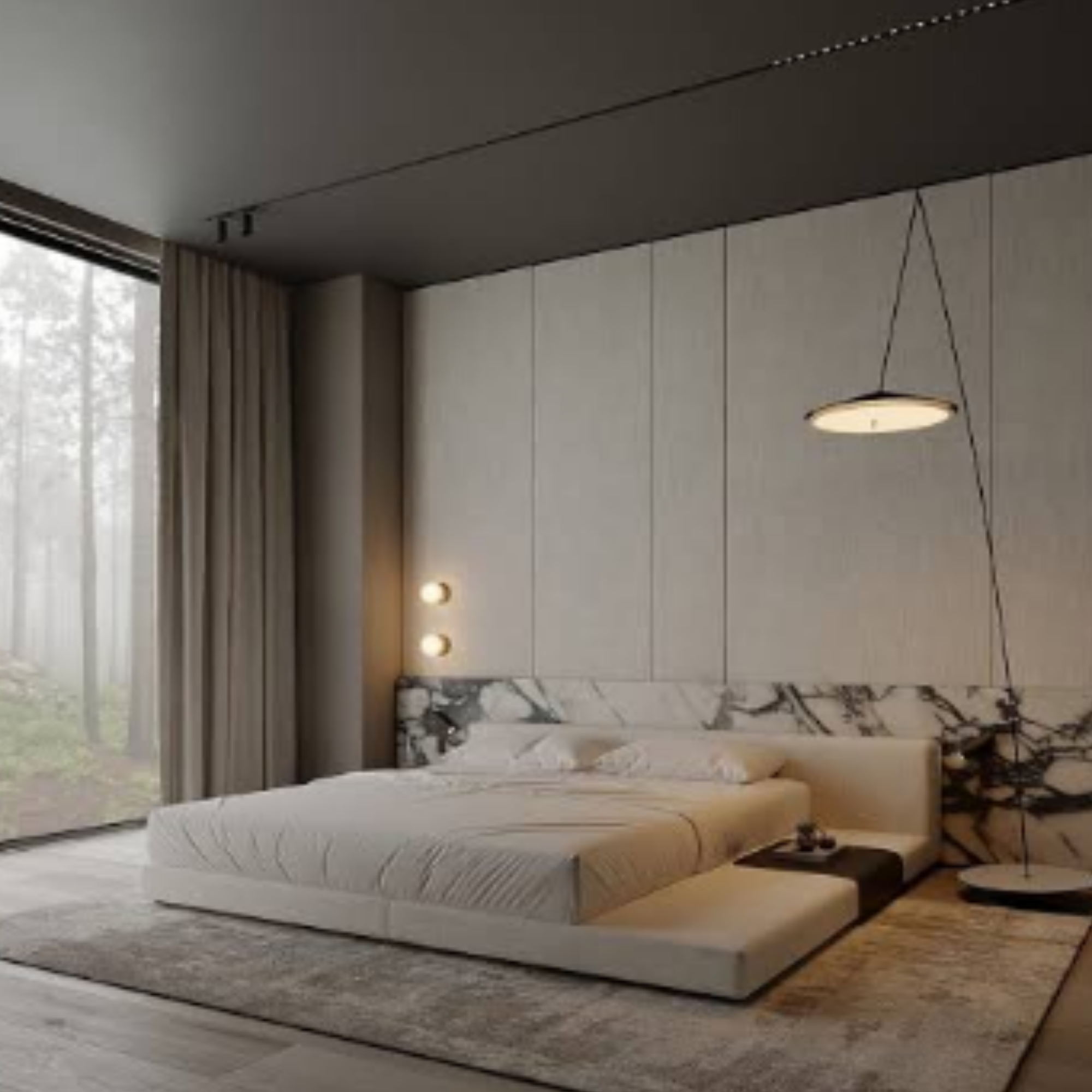
A dedicated restoration zone optimized for sleep hygiene.. Source: Interior Design Ideas
The Somatic Architecture Sandbox Retreat
Understanding these 21 principles intellectually is the first step, but experiencing them physically is what drives lasting behavioral change. For leaders who want to move beyond theoretical refactoring and physically immerse themselves in these systems, the upcoming somatic architecture sandbox clinical restorative wellness retreat offers a profound opportunity.
This specialized intensive moves far beyond standard executive coaching retreats by placing leaders inside environments actively engineered for autonomic recovery. It serves as a live, interactive "sandbox" where executives can test exactly how structural elements, biophilic design, proprioceptive feedback loops, and circadian light manipulation directly alter their physiology in real-time.
During the retreat, experts map your specific stress-response profile against different spatial designs. You will physically experience the difference between a mixed-use activation room and a deeply curated restoration zone, learning how to track your own biometric responses to space. The goal is not just to relax for the day, but to return home with a concrete, deeply personalized blueprint for refactoring your own physical environment.
By viewing your home not as a storage space for your belongings, but as the foundational hardware for your biological operating system, you fundamentally change your trajectory. When you remove friction, externalize decisions, and clarify your visual and physical inputs, you stop relying on willpower to decompress. You simply let the system work.